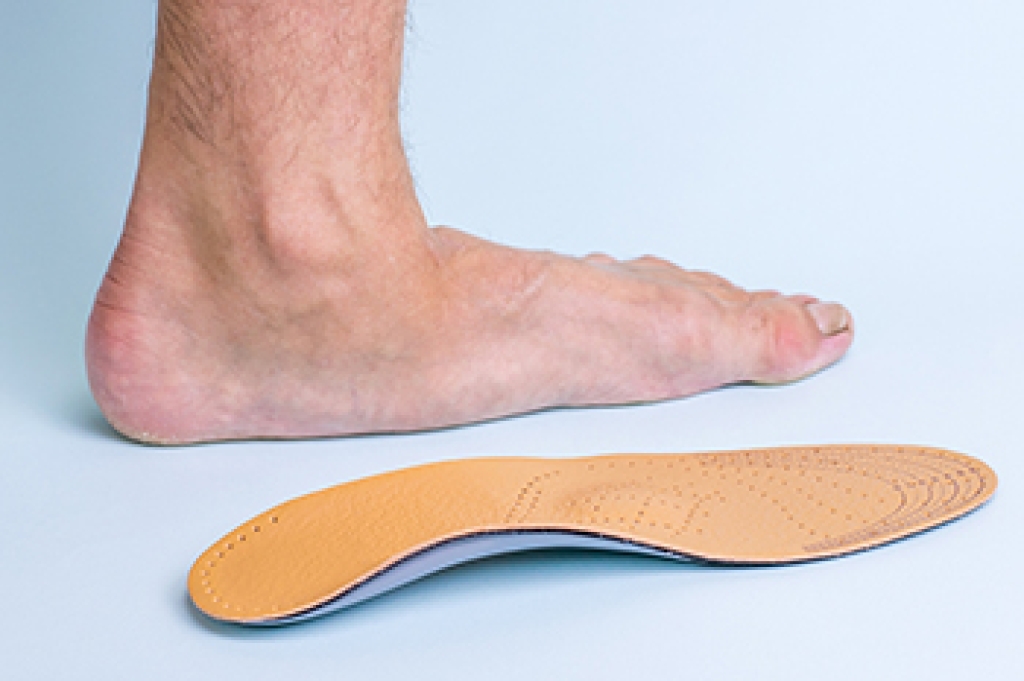
Flat Feet and the Benefits of Custom Made Orthotics

Flat feet, also known as fallen arches, occur when the arches of the feet collapse, causing the entire sole to touch the ground. This condition can lead to symptoms like foot pain, swelling, fatigue, difficulty walking, and imbalance. Risk factors include genetics, obesity, injury, and certain medical conditions that affect joint stability. Custom made orthotics can help by supporting the arch, improving alignment, redistributing pressure, and reducing strain on the feet, ankles, and lower limbs. A podiatrist can evaluate foot structure, gait, and symptom severity to design personalized orthotics and recommend footwear or exercises to improve function. If flat feet are causing discomfort or limiting activity, it is suggested that you consult a podiatrist who can determine what type of orthotic is needed for comfort and support.

Custom orthotics can be an important solution for reducing foot pain by targeting its structural causes rather than just the symptoms. When the feet are misaligned, excess strain develops in the muscles, tendons, and ligaments, often resulting in discomfort in the arches, balls of the feet, or toes. Orthotics are designed to match each foot’s natural shape, supporting proper alignment and evenly distributing pressure to ease pain and improve movement.

Foot pain is commonly caused by overuse, wearing improper footwear, or biomechanical issues that place added stress on sensitive areas. By stabilizing the foot and restoring natural motion, custom orthotics help reduce strain, calm inflammation, and promote healing. Many patients experience lasting relief and greater comfort while walking, standing, or exercising.

Created from a detailed assessment using advanced imaging or casting, each pair of orthotics is tailored to your individual needs. If you are experiencing ongoing foot pain, it is suggested that you contact our office for an evaluation and treatment.

If you have any questions, please feel free to contact our office located in St. Petersburg, FL .

Read more about Sole Marketing and Heel Pain

Understanding Charcot Neuroarthropathy and Why Early Care Matters

Charcot neuroarthropathy, or CN,  is a serious foot condition most often seen in people with nerve damage, especially those with diabetes. Because sensation is reduced, small injuries or stress fractures may go unnoticed. Continued walking on an injured foot can trigger inflammation, bone weakening, and joint collapse. The foot may become swollen, warm, red, and unstable, sometimes changing shape over a short period of time. Pain may be mild or absent, which can delay treatment. As the structure of the foot breaks down, pressure increases on certain areas, raising the risk of skin breakdown and ulcers. Early recognition and offloading are critical to slowing progression and protecting the foot. Management may include immobilization, custom bracing, and long-term footwear changes to maintain stability. If you notice unexplained swelling, warmth, or shape changes in your foot, it is suggested that you see a podiatrist promptly for evaluation and appropriate care.

Some foot conditions may require additional professional care. If you have any concerns, contact one of our podiatrists of Advanced Podiatry and Wound Care. Our doctors can provide the care you need to keep you pain-free and on your feet.

Rare Foot Conditions

The majority of foot conditions are common and can be treated by a podiatrist.  Standard diagnostic procedures are generally used to identify specific conditions and treatment can be rendered. A podiatrist also treats rare foot conditions which can be difficult to diagnose and may need extra attention and care. 

There are many rare foot conditions that can affect children. Some of these can include:

  • Freiberg’s disease
  • Kohler’s disease
  • Maffucci syndrome

Freiberg’s disease - This can be seen as a deterioration and flattening of a metatarsal bone that exists in the ball of the foot. It typically affects pre-teen and teenage girls, but can affect anyone at any age. Symptoms that can accompany this can be swelling, stiffness, and the patient may limp. 

Kohler’s disease - This often targets the bone in the arch of the foot and affects younger boys. It can lead to an interruption of the blood supply which ultimately can lead to bone deterioration. The patient may limp or experience tenderness, swelling, and redness.

Maffucci syndrome - This affects the long bones in a child’s foot leading to the development of abnormal bone lesions. They are benign growths and typically develop in early childhood and the bones may be susceptible to breaking. 

A podiatrist can properly diagnose and treat all types of rare foot conditions. If your child is affected by any of these symptoms or conditions, please don’t hesitate to call our office so the correct treatment method can begin.

If you have any questions, please feel free to contact our office located in St. Petersburg, FL . We offer the newest diagnostic and treatment technologies for all your foot care needs.

Read more about Rare Foot Conditions

Get Professional Care for a Broken Foot or Ankle

Constant care and regular evaluation are important for a foot or ankle fracture. If left untreated, foot or ankle fractures can worsen over time and create more serious problems.

Don't wait to be examined if you believe you've experienced a foot or ankle fracture.

Lingering Foot Concerns After Early Clubfoot Surgery

Clubfoot is a congenital condition in which a baby is born with one or both feet turned inward and downward due to abnormal development of the bones, muscles, and soft tissues of the lower leg and foot. Some adolescents and young adults who were treated for clubfoot in childhood continue to notice foot and ankle challenges later in life. Early surgical approaches often focused on releasing tight soft tissues to improve alignment, which helped restore function at the time. As the body grows, however, those altered tissues may lack flexibility or strength. This can lead to stiffness, fatigue with activity, limited ankle motion, or discomfort during prolonged walking or sports. Changes in foot mechanics may also contribute to uneven shoe wear or callus formation. These symptoms are not uncommon and do not mean treatment failed, but they do deserve attention. Modern care focuses on restoring comfort, mobility, and balance through individualized evaluation. If ongoing foot or ankle symptoms interfere with daily life, it is suggested that a podiatrist evaluate the condition and discuss appropriate care options.

Congenital foot problems require immediate attention to avoid future complications. If you have any concerns, contact one of our podiatrists of Advanced Podiatry and Wound Care. Our doctors can provide the care you need to keep you pain-free and on your feet.

Congenital foot problems are deformities affecting the feet, toes, and/or ankles that children are born with. Some of these conditions have a genetic cause while others just happen. Some specific foot ailments that children may be born with include clubfeet, polydactyly/macrodactyly, and cleft foot. There are several other foot anomalies that can occur congenitally. What all of these conditions have in common is that a child may experience difficulty walking or performing everyday activities, as well as trouble finding footwear that fits their foot deformity. Some of these conditions are more serious than others. Consulting with a podiatrist as early as possible will help in properly diagnosing a child’s foot condition while getting the necessary treatment underway.

What are Causes of Congenital Foot Problem?

A congenital foot problem is one that happens to a child at birth. These conditions can be caused by a genetic predisposition, developmental or positional abnormalities during gestation, or with no known cause.

What are Symptoms of Congenital Foot Problems?

Symptoms vary by the congenital condition. Symptoms may consist of the following:

  • Clubfoot, where tendons are shortened, bones are shaped differently, and the Achilles tendon is tight, causing the foot to point in and down. It is also possible for the soles of the feet to face each other.
  • Polydactyly, which usually consists of a nubbin or small lump of tissue without a bone, a toe that is partially formed but has no joints, or an extra toe.
  • Vertical talus, where the talus bone forms in the wrong position causing other bones in the foot to line up improperly, the front of the foot to point up, and the bottom of the foot to stiffen, with no arch, and to curve out.
  • Tarsal coalition, when there is an abnormal connection of two or more bones in the foot leading to severe, rigid flatfoot.
  • Cleft foot, where there are missing toes, a V-shaped cleft, and other anatomical differences.
  • Macrodactyly, when the toes are abnormally large due to overgrowth of the underlying bone or soft tissue.

Treatment and Prevention

While there is nothing one can do to prevent congenital foot problems, raising awareness and receiving neonatal screenings are important. Early detection by taking your child to a podiatrist leads to the best outcome possible.

If you have any questions, please feel free to contact our office located in St. Petersburg, FL . We offer the newest diagnostic and treatment technologies for all your foot care needs.
Read more about Congenital Foot Problems

Connect With Us

scroll to top